
Premium packaging is often associated with heavy materials, elaborate finishes, and high production costs. But for soap brands, a higher-end presentation does not always require an expensive packaging solution. Smart structural choices, effective printing, and carefully selected materials can create packaging that looks polished without pushing costs beyond a practical range.
That is the advantage of soap boxes wholesale. Ordering packaging in larger quantities can help brands manage unit costs while maintaining consistency across their product range. The challenge is finding the right balance: packaging should be economical enough for regular production but attractive enough to support the perceived value of the soap inside.
Premium Is More About Perception Than Price
Customers do not judge packaging based on how much a brand spent producing it. They respond to what they can see, touch, and experience.
A simple box with clean typography, good material quality, and a well-balanced design can often feel more premium than an expensive package overloaded with decorative elements.
Several details can influence perceived quality:
- A well-fitted box structure
- Smooth, high-quality printing
- Clear and intentional typography
- Consistent brand colors
- A suitable paperboard thickness
- Thoughtful use of finishes
- Minimal clutter in the artwork
The goal is to make every design choice feel deliberate. Premium packaging usually comes from cohesion rather than excess.
Why Wholesale Ordering Makes Sense for Soap Brands
Soap is often sold as part of a collection. A brand may offer multiple scents, ingredients, sizes, or seasonal varieties. This means packaging requirements can grow quickly.
Ordering soap boxes wholesale can help businesses maintain a consistent supply of packaging while potentially reducing the cost per unit compared with smaller production runs.
Wholesale production can also support consistency across the product line. Once dimensions, materials, colors, and printing specifications are finalized, the same standards can be applied across a larger quantity of boxes.
For growing businesses, this can make inventory planning easier and reduce the need to place frequent small orders.
However, the order quantity should still be practical. Brands should consider expected sales volume, storage space, product updates, and whether the packaging design may change in the near future.
The Right Material Can Deliver Quality Without Unnecessary Cost
Material selection is one of the biggest factors affecting both packaging performance and overall cost.
Paperboard is widely used for soap cartons because it provides a printable surface, can be cut into different structures, and can be selected in various thicknesses depending on the product’s requirements.
A heavier material is not automatically better. The right board should provide sufficient strength for the soap while remaining appropriate for the packaging budget.
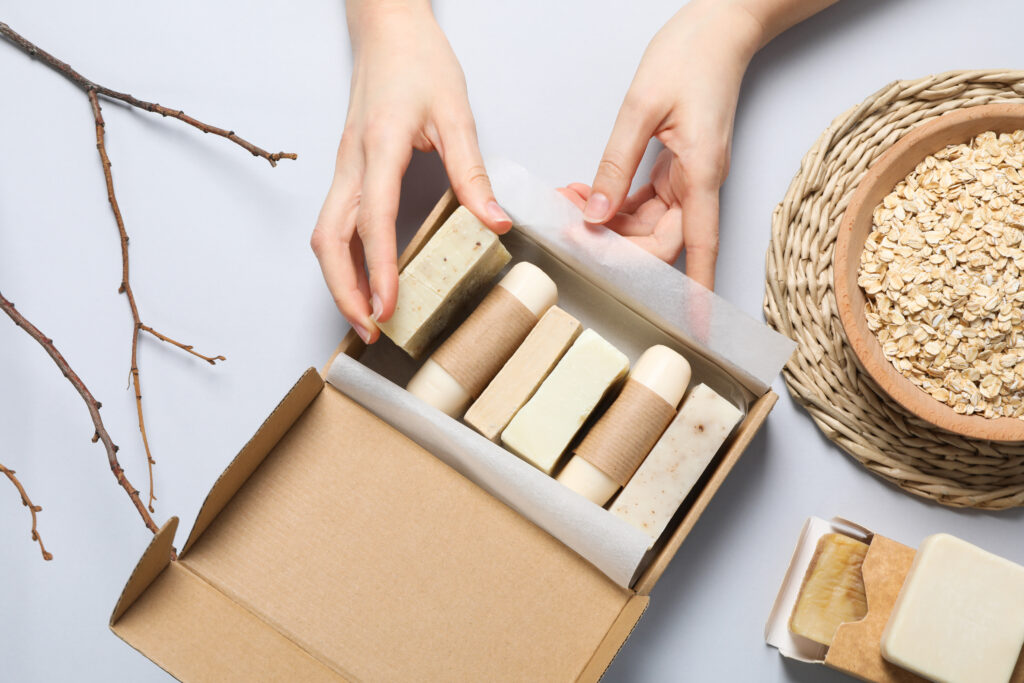
For handmade or natural soap brands, kraft-style paperboard can support a simple and organic appearance. Brands with a more polished or luxury-focused identity may prefer smoother paperboard surfaces that reproduce detailed printing more effectively.
The important question is not, “What is the most expensive material?” It is, “What material best supports this product and brand?”
Design Choices That Make Affordable Packaging Look Better
When working with a controlled packaging budget, design becomes even more important.
Instead of relying on multiple expensive finishing techniques, brands can use layout, color, and typography to create a strong visual impact.
For example, a simple design with generous white space and one distinctive brand color can feel modern and refined. A bold pattern can create shelf appeal without requiring an elaborate structure.
Other cost-conscious design strategies include:
- Using a consistent layout across product variations
- Limiting the number of print colors where appropriate
- Creating one box structure for multiple soap varieties
- Using product labels or color variations to distinguish scents
- Applying one specialty finish to a focal element rather than the entire box
These choices can help control production costs while ensuring the packaging still feels intentional.
Choosing the Right Production Partner
Even the best packaging design depends on accurate production. A reliable box manufacturer can help ensure that the final cartons are properly sized, printed clearly, and produced consistently across the order.
Before selecting a supplier, it is useful to evaluate more than the initial price.
Consider factors such as:
- Material options and quality
- Printing capabilities
- Structural customization
- Finishing choices
- Sample availability
- Production consistency
- Wholesale capacity
- Communication throughout the order process
For custom soap packaging, requesting a sample can be particularly valuable. It allows the brand to check how the soap fits inside the box, review the print quality, and see whether the chosen material delivers the intended look and feel.
Small Finishing Details Can Create a Big Difference
Premium packaging does not always require multiple finishing techniques. Sometimes, one subtle detail can elevate the entire design.
Depending on the brand and budget, options may include:
- A matte coating for a clean appearance
- Spot UV to highlight a logo or pattern
- Embossing for a tactile detail
- Foil stamping on a small focal area
- Die-cut windows for product visibility
The key is to use finishes strategically. A single embossed logo, for example, can add a sense of craftsmanship without requiring expensive decoration across every surface.
Brands should choose enhancements that support their identity rather than adding finishes simply because they are available.
Packaging Should Work Beyond the Retail Shelf
Soap packaging may be displayed in stores, sold through marketplaces, included in gift sets, or shipped directly to customers. Each sales channel can place different demands on the box.
Retail packaging needs to attract attention and communicate the product clearly. E-commerce packaging must also consider the handling involved during shipping. Gift-oriented products may benefit from a more refined opening experience.
A versatile design can help brands maintain consistency across these channels without creating separate packaging systems for every situation.
Proper sizing also matters. An oversized box can increase material use and make the product look less considered, while a well-fitted structure can improve both presentation and efficiency.
Final Thoughts
Affordable and premium are not opposites in packaging. A soap box does not need an elaborate structure or excessive decoration to make a positive impression.
With the right material, precise sizing, consistent branding, and purposeful design, soap boxes wholesale can give businesses a practical way to maintain packaging quality while managing production costs.
The best approach is to focus on the details customers actually notice. Clear printing, a well-made structure, thoughtful colors, and a consistent brand identity can make even a simple soap carton feel considered and professional. When those elements work together, affordable packaging stops looking like a compromise and starts becoming part of the product’s value.