

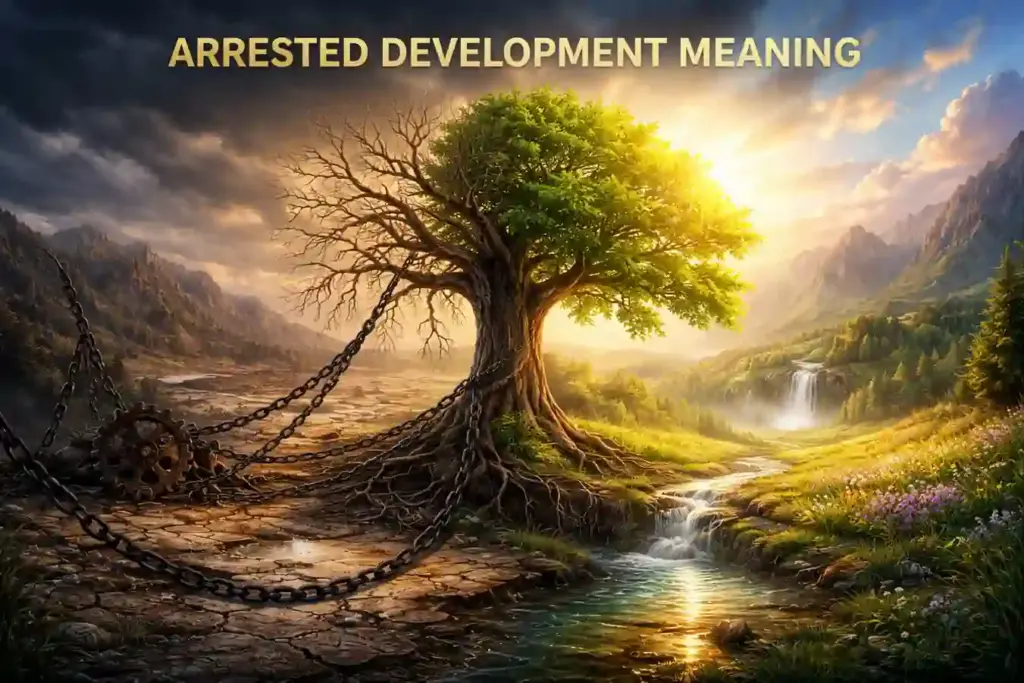
Arrested Development meaning denotes a condition where emotional, social, or psychological growth slows or pauses at a particular stage. A person may age physically, yet behavior, coping style, or emotional responses remain tied to earlier life phases. This concept appears frequently in psychology, education, relationships, and personal growth discussions because it explains repeated patterns that feel “stuck” rather than progressive.
The term does not describe intelligence or worth. It focuses on maturity levels, emotional regulation, responsibility handling, and social interaction patterns that do not evolve at the same pace as age or experience.
How Arrested Development Shows Up in Daily Behavior
People experiencing arrested development may appear functional in some areas while struggling in others. Work skills may advance, yet emotional responses remain childlike or adolescent in tone.
Observable patterns:
- Difficulty managing frustration or criticism
- Strong reactions to minor challenges
- Dependence on others for emotional reassurance
- Avoidance of accountability
- Repetitive relationship conflicts
- Fear of independence or decision-making
These behaviors stem from unmet emotional needs earlier in life rather than conscious choices.
Psychological Roots Behind Arrested Development
Arrested development usually begins during formative years. Emotional growth depends on safety, support, validation, and guidance. A disruption during these stages may slow emotional progression.
Possible contributing experiences:
- Childhood neglect or emotional absence
- Overprotective parenting that limits independence
- Exposure to trauma or instability
- Lack of emotional validation
- Repeated discouragement during self-expression
The mind adapts to survive early conditions, then keeps using those same strategies later, even after circumstances change.
Emotional Growth Stages and Where Growth Pauses
Human emotional development follows a gradual path. Each stage supports the next. A pause during one phase affects future transitions.
| Development Stage | Expected Skills | Signs of Growth Pause |
| Early childhood | Emotional safety, trust | Anxiety, fear of abandonment |
| Middle childhood | Social skills, empathy | Control issues, attention-seeking |
| Adolescence | Identity formation | Dependency, impulsive choices |
| Early adulthood | Autonomy, emotional balance | Avoidance of responsibility |
A pause does not remain permanent. Awareness and intentional growth allow progress at any stage.
Arrested Development in the Relationships
Love and family relationships reveal emotional maturity levels clearly. Arrested development may surface through conflict styles or attachment behaviors.
Relationship-related signs:
- Expecting partners to manage emotions
- Withdrawal during disagreements
- Jealousy rooted in insecurity
- Repeating the same relational patterns
- Resistance toward compromise
Healthy relationships require emotional flexibility, accountability, and communication skills that mature over time.
Arrested Development vs Emotional Immaturity
These two concepts overlap yet differ slightly. Emotional immaturity describes behavior patterns, while arrested development explains the developmental pause behind those behaviors.
Differences are:
- Emotional immaturity focuses on present actions
- Arrested development traces behavior to stalled growth stages
- Immaturity may change through experience alone
- Arrested development benefits from reflection and support
Both conditions respond well to personal insight and emotional skill-building.
Workplace Behavior and Arrested Development
Professional environments highlight emotional growth gaps quickly. Teamwork, leadership, and stress management rely on emotional maturity.
Prominent indicators:
- Defensive responses to feedback
- Blame-shifting during mistakes
- Difficulty handling authority
- Avoidance of long-term planning
- Resistance toward learning new skills
Skill development may progress faster than emotional readiness, leading to friction despite technical competence.
Cultural and Social Factors That Reinforce Growth Delays
Social expectations shape emotional expression. Some environments discourage vulnerability, reflection, or emotional discussion, slowing growth.
Contributing social patterns:
- Emphasis on performance over emotional health
- Stigma around therapy or counseling
- Gender norms limiting emotional expression
- Family systems discouraging independence
Growth requires permission to reflect, feel, and adapt without judgment.
Healing and Growth Beyond Arrested Development
Progress begins through awareness. Recognizing repeated patterns allows conscious effort toward emotional expansion.
Helpful approaches:
- Journaling emotional responses
- Practicing self-regulation techniques
- Learning communication skills
- Seeking therapy or counseling
- Building healthy boundaries
Growth occurs gradually through consistent emotional practice rather than sudden change.
Therapy Approaches That Support Emotional Growth
Mental health professionals address arrested development through methods focused on emotional awareness and behavior restructuring.
Popular therapeutic approaches:
- Cognitive behavioral strategies for thought patterns
- Inner-child work for early emotional repair
- Attachment-based therapy
- Trauma-informed counseling
- Mindfulness-based emotional regulation
These approaches support gradual maturity without judgment.
Arrested Development in Popular Language
Outside clinical settings, people use the phrase casually to describe adult behavior that feels age-inappropriate. While informal usage lacks diagnostic depth, it highlights visible emotional gaps.
Examples of casual usage:
- Avoiding adult responsibilities
- Reacting impulsively under pressure
- Relying heavily on parental support
- Refusing personal accountability
Casual references oversimplify the deeper emotional layers involved.
Personal Growth After Emotional Stagnation
Emotional development remains flexible across life stages. Growth resumes through intentional emotional work and self-awareness.
Signs of progress:
- Improved emotional regulation
- Healthier communication habits
- Increased self-trust
- Reduced defensiveness
- Greater empathy
Each step forward strengthens emotional resilience.
Inside Arrested Development
| Core concept | Emotional or psychological growth pause |
| Main cause | Early unmet emotional needs |
| Affected areas | Relationships, work, self-regulation |
| Change path | Awareness, practice, support |
| Outcome | Emotional maturity over time |
Essentially, arrested development involves interruptions in emotional growth rather than lifelong restrictions. Growth can resumes through awareness, reflection, and consistent emotional practice. Human development remains adaptable, and emotional maturity strengthens through intentional effort at any age.