

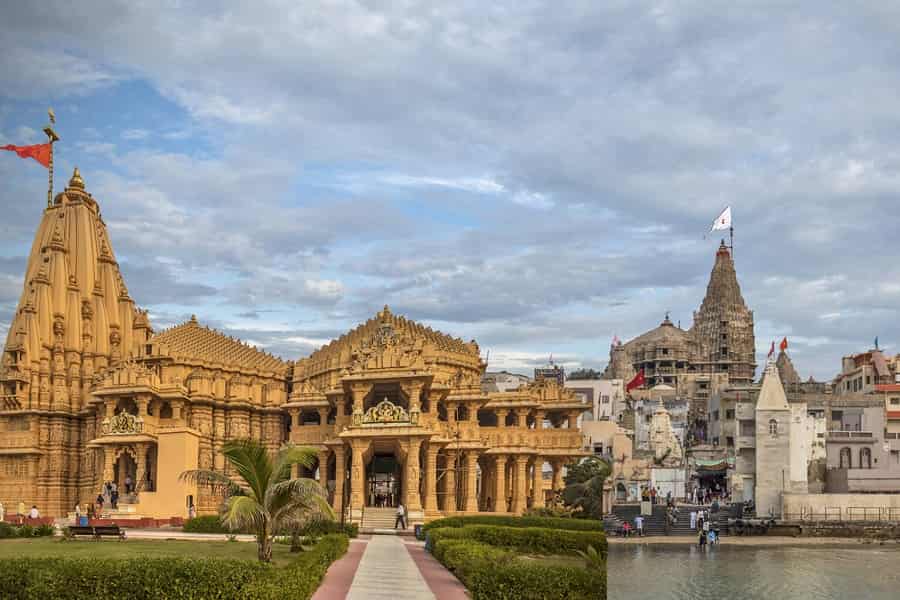
The spiritual essence of Gujarat beckons pilgrims from across the globe to experience the sanctity of the somnath dwarka tour. This sacred circuit, often referred to as the gateway to salvation, connects two of the most significant sites in Hindu mythology. While Dwarka serves as the ancient kingdom of Lord Krishna, Somnath stands as the first among the twelve Jyotirlingas of Lord Shiva. Undertaking this journey is not merely about visiting temples; it is an immersive dive into India’s rich Vedic history, architectural grandeur, and the serene beauty of the Arabian Sea coastline. As you traverse through these holy lands, the air carries chants of devotion, and the horizon meets the sea in a display of divine artistry.
Historical Significance of the Dwarkadhish Temple
The Dwarkadhish Temple, also known as Jagat Mandir, is the heart of Dwarka. Historically believed to have been built by Vajranabha, the great-grandson of Lord Krishna, the current structure showcases the intricate Chalukyan style of architecture. The five-story main shrine, supported by 72 pillars, is a marvel of limestone carving that has stood the test of time and tides.
Walking through the Moksha Dwara (Door to Salvation) and the Swarga Dwara (Door to Heaven), devotees feel a profound sense of peace. The temple’s black marble idol of Lord Krishna, depicted as the King of Dwarka, is adorned with exquisite jewelry and silk. The flag atop the temple, changed five times a day, flutters majestically, symbolizing the eternal presence of the deity over his kingdom.
The Eternal Glory of Somnath Jyotirlinga
The Somnath Temple is a symbol of resilience and eternal faith. Known as “The Shrine Eternal,” it has been destroyed and rebuilt several times throughout history. The current temple, reconstructed in the Māru-Gurjara style, reflects the golden era of Indian temple architecture. Situated exactly on the shore of the Arabian Sea, the temple offers a view where no land exists in a straight line between the Somnath shore and the South Pole.
The Baan Stambh (Arrow Pillar) stands as a testament to ancient Indian geographical knowledge. Inside the sanctum, the Jyotirlinga radiates a powerful energy that draws millions of seekers. The evening light and sound show narrate the saga of how the Moon God (Chandra) regained his luster here by worshipping Lord Shiva, giving the place its name—Somnath, the Lord of the Moon.
Ideal Itinerary for a Spiritual Circuit
A well-planned journey usually begins at Ahmedabad or Rajkot, moving toward the coastal belt. A four-to-five-day plan allows for a comprehensive experience without rush.
- Day 1: Arrival and Jamnagar: Start from Rajkot or Ahmedabad. Visit the Bala Hanuman Temple in Jamnagar, famous for its continuous chanting of “Sri Ram, Jai Ram, Jai Jai Ram.”
- Day 2: Dwarka Darshan: Spend the day at the Dwarkadhish Temple. Visit Rukmini Devi Temple, located outside the main city, dedicated to Krishna’s consort.
- Day 3: Bet Dwarka and Nageshwar: Take a ferry to Bet Dwarka, the residential island of Krishna. On the way back, visit the Nageshwar Jyotirlinga and Gopi Talav.
- Day 4: Porbandar to Somnath: Visit Kirti Mandir, the birthplace of Mahatma Gandhi, in Porbandar. Arrive at Somnath for the evening Aarti.
- Day 5: Somnath and Departure: Visit Bhalka Tirth, the site where Lord Krishna is believed to have left his mortal coil, before heading back for departure.
Sacred Sites Near Dwarka You Must Visit
Beyond the main temple, Dwarka is surrounded by sites mentioned in the Puranas. Bet Dwarka is a primary attraction; the boat ride across the sea provides a transition from the mainland to the spiritual isolation of the island. It is here that Sudama is said to have met his friend Krishna, offering him a handful of puffed rice.
Another vital stop is the Nageshwar Jyotirlinga. The giant statue of Lord Shiva sitting in meditation is visible from miles away. The temple is one of the twelve Jyotirlingas and is believed to protect devotees from all poisons and negative energies. Gopi Talav, the lake where the Gopis are said to have reunited with Krishna, offers a unique yellow clay known as Gopi Chandan, which pilgrims apply to their foreheads as a mark of devotion.
Architectural Wonders of the Saurashtra Coast
The Saurashtra region is a treasure trove of stone carvings. In Somnath, the exterior walls are decorated with sculptures of various deities, celestial dancers, and musicians. The “Sabha Mandap” or assembly hall provides a vast space for devotees to sit and meditate. The use of honey-colored stones makes the temple glow during sunset, creating a celestial atmosphere.
In Porbandar, the Sudama Temple is perhaps the only major temple dedicated to the devotee Sudama. It serves as a reminder of the value of friendship and humility. The architecture here is simpler but carries a heavy emotional weight for those familiar with the stories of the Bhagavad Gita.
Rituals and Traditions of the Holy Coastline
Participating in the local rituals provides a deeper connection to the culture. In Dwarka, the “Dhvaj Arohan” (flag hoisting) is a ceremony of immense pride. Families often wait years for their turn to sponsor the flag. The fabric is multi-colored and features symbols of the sun and moon.
In Somnath, the “Somanth Mahapuja” is a grand affair. The chanting of Vedic hymns by the priests creates a resonance that vibrates through the stone walls. Taking a holy dip in the Triveni Sangam—the confluence of the Hiran, Kapila, and Saraswati rivers—is considered essential for cleansing the soul before entering the main shrine.
Local Cuisine and Cultural Experiences
The flavors of Gujarat add a distinct zest to the journey. While the food is strictly vegetarian near the temple zones, the variety is staggering. A traditional Gujarati Thali featuring dhokla, thepla, kadhi, and shrikhand is a must-try. In Dwarka, the local markets are filled with embroidered fabrics, beadwork, and brass idols.
Cultural performances, especially during festivals like Janmashtami or Shivratri, transform these towns. The atmosphere becomes electric with folk music, Garba dances, and processions that take over the streets, offering a glimpse into the living traditions of the Vadhwan and coastal communities.
Logistics and Travel Tips for Pilgrims
Reaching these destinations has become significantly easier with improved infrastructure.
- By Air: The nearest airports are Jamnagar and Rajkot for Dwarka, and Diu or Rajkot for Somnath.
- By Rail: Both Dwarka and Veraval (the station for Somnath) are well-connected by trains from major Indian cities like Mumbai, Delhi, and Ahmedabad.
- By Road: A smooth highway connects Dwarka and Somnath (approximately 230 km apart). This coastal drive offers views of the sea and wind farms.
The best time to visit is from October to March when the weather is pleasant. During summer, the coastal humidity can be high, though the sea breeze provides some relief in the evenings.
Connectivity Between the Two Holy Cities
The stretch between Dwarka and Somnath is more than just a road; it is a path through history. Passing through Harshad, one can visit the Harsiddhi Mata Temple, perched on a hill overlooking the sea. The Goddess Harsiddhi was the Kuldevi of King Vikramaditya and is highly revered by local sailors.
Traveling south, Porbandar serves as a perfect midpoint. Apart from its Gandhian heritage, the city offers a quiet beach and a sanctuary for migratory birds. The transition from the Krishna-centric culture of the north to the Shiva-centric culture of the south is seamless, reflecting the unified spirit of Indian spirituality.
Understanding the Spiritual Significance of Bhalka Tirth
A somnath dwarka tour is incomplete without paying homage at Bhalka Tirth. This site marks the spot where an arrow hit Lord Krishna’s foot, leading to his departure from the earth. The temple houses a beautiful depiction of Krishna reclining under a Peepal tree.
Nearby is the Dehotsarg Teerth, located on the banks of the Hiran River, where the final rites of the Lord were performed. These sites bring a sense of closure to the Krishna saga that begins in Mathura and thrives in Dwarka, reminding pilgrims of the cyclical nature of life and the inevitability of the divine will.
Preserving the Sanctity of the Heritage Sites
As tourism grows, the focus on sustainable and respectful travel is paramount. Both temple trusts have implemented strict rules regarding photography and dress codes to maintain the sanctity of the environment. Visitors are encouraged to use eco-friendly transport options like battery-operated carts available at the Somnath temple complex.
The cleanliness of the beaches in Dwarka (Shivrajpur Beach) and Somnath has improved significantly, making them ideal for quiet reflection after temple visits. Shivrajpur Beach, a Blue Flag certified destination, offers crystal clear waters and white sands, proving that spiritual journeys can also include moments of natural wonder.
Conclusion and Further Spiritual Aspirations
The journey through Saurashtra leaves an indelible mark on the heart. The strength of the stone at Somnath and the rhythmic waves at Dwarka serve as metaphors for the permanence of faith. After completing this coastal pilgrimage, many seekers look toward the majestic peaks of the North. Much like the peaceful completion of the somnath dwarka tour, those who find solace in the sea often find themselves drawn to the heights of the Himalayas. For those planning their next great spiritual milestone, the kailash mansarovar tour represents the ultimate ascent toward the abode of Mahadev. Whether by the crashing waves of the Arabian Sea or the silent snows of Tibet, the quest for the divine remains the most profound human experience.