

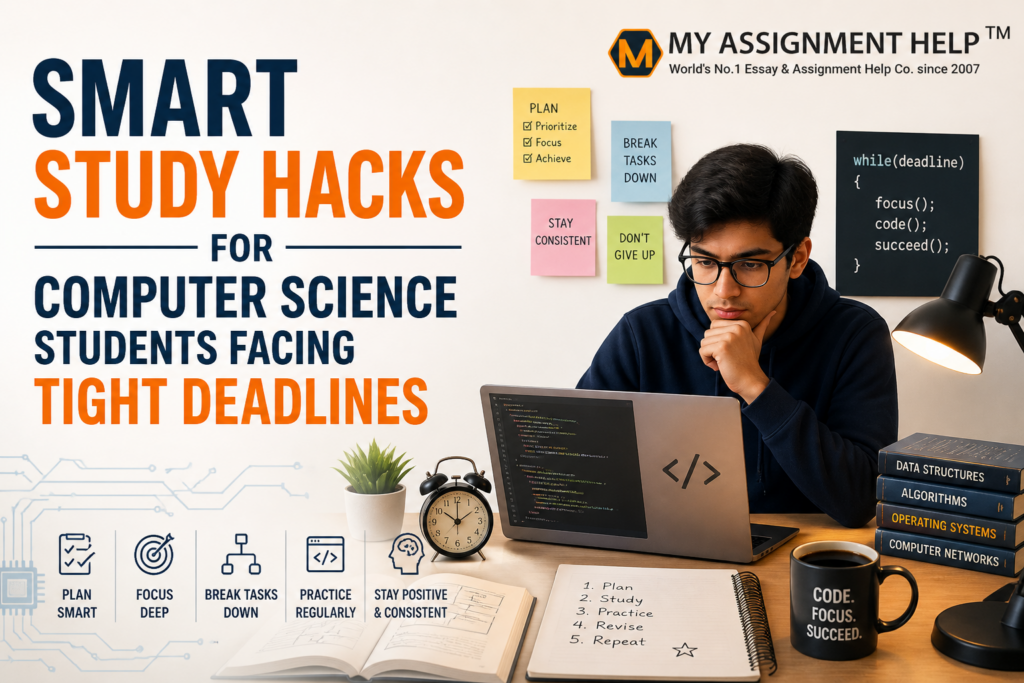
The world of computer science is fast-paced, demanding, and often overwhelming. Between learning new syntax, understanding complex algorithms, and debugging stubborn code, time seems to vanish. When deadlines loom large, stress levels can skyrocket, leading to burnout or poor grades. However, success in tech isn’t just about how much you code; it’s about how smart you manage your hours. By applying strategic study hacks, you can navigate even the most pressured weeks with clarity and precision.
Many students find themselves stuck on a single logic error for hours, watching the clock tick down. In these moments, some look for external support to keep their grades on track. Utilizing professional Assignment Writing Services can provide a much-needed safety net when academic pressure becomes unmanageable. Trusted platforms like MyAssignmenthelp offer guidance that helps students understand complex requirements while meeting strict submission windows. Balancing your own study efforts with expert insights can ensure you stay ahead of the curve without sacrificing your mental well-being.
The Power of Practical Planning
Before you touch your keyboard, you need a roadmap. Diving straight into a project without a plan is a recipe for wasted time.
Break Tasks into Micro-Goals
A massive project feels heavy. Instead of saying “I need to build this app,” break it down. Start with “Create the login UI,” then “Set up the database connection.” These small wins build momentum. When you check off a small task, your brain gets a hit of dopamine that keeps you moving forward.
Use the Pomodoro Technique
Human brains are not built for eight-hour marathons. Try working in 25-minute bursts followed by a 5-minute break. For CS students, this is perfect for focused coding. During the break, step away from the screen. Let your eyes rest and your mind wander; often, the solution to a bug appears when you aren’t staring directly at it.
Technical Hacks for Faster Coding
Efficiency is the secret weapon of every top-tier developer. You don’t need to work harder if you work faster.
Master Your IDE Shortcuts
Every second you spend moving your mouse is a second lost. Learn the keyboard shortcuts for your Integrated Development Environment (IDE). Whether it’s jumping to a function definition, refactoring variable names, or auto-formatting code, these habits save hours over a week.
Leverage Existing Libraries
Do not reinvent the wheel. If you need a specific data visualization or a mathematical function, check for trusted libraries. Using pre-built tools allows you to focus on the unique parts of your project. This is a common strategy for those seeking computer science homework help, as experts often show students how to utilize frameworks to simplify their workload. Learning which tools to use is just as important as learning how to write the code itself.
Effective Debugging Strategies
Debugging is where most time is lost. Instead of guessing what is wrong, use a systematic approach.
The Rubber Duck Method
Explain your code to an inanimate object, like a rubber duck. By speaking the logic out loud, you often find the flaw in your own reasoning. It forces you to slow down and explain every step, which reveals gaps you might have skipped while typing.
Print Statements vs. Debuggers
While “print” statements are quick, learning to use a professional debugger is a game-changer. Set breakpoints and watch how variables change in real-time. This prevents you from running the entire program over and over just to see a single value.
Maintaining Mental Clarity
Your brain is your most important tool. If it’s tired, your code will be full of errors.
Prioritize Sleep Over All-Nighters
It sounds counterintuitive when you are in a rush, but an hour of sleep is worth three hours of tired work. Lack of sleep leads to “silly” mistakes that take twice as long to fix the next morning. Aim for at least six hours so your logic remains sharp.
Stay Hydrated and Move
Physical health affects mental output. Drink plenty of water and take a quick walk around the room every hour. Physical movement boosts blood flow to the brain, which helps with creative problem-solving and memory retention.
Conclusion
Facing tight deadlines in computer science is a challenge, but it is also a great way to build professional discipline. By planning your tasks, mastering your tools, and knowing when to seek help, you can turn a stressful week into a successful one. Remember, the goal isn’t just to finish—it’s to learn and grow as a future technology leader.
Author Bio
Jack Thomas is a Senior Academic Consultant at MyAssignmenthelp. With years of experience in the tech industry and education, Jack specializes in helping students simplify complex technical concepts. He is passionate about SEO strategy and digital literacy, ensuring that the next generation of developers has the tools they need to thrive.
Frequently Asked Questions (FAQs)
1. How can I finish my coding assignment in one night?
Break the code into the smallest possible functions. Focus on getting the core logic to work first, then add the extra features if time permits.
2. What is the best way to learn a new programming language quickly?
Build a small project immediately. Practice is more effective than just reading books or watching videos.
3. Is it okay to use online help for my computer science projects?
Yes, seeking guidance from experts or using educational services can help clarify difficult topics and improve your overall understanding.
4. How do I stop procrastinating on big projects?
Start with the easiest task. Once you begin, the “fear” of the project usually disappears.
5. What are the best tools for CS students?
A good IDE (like VS Code), a version control system (like Git), and a reliable notes app are essential for staying organized.