

A vehicle’s air-conditioning system depends on several components working together to move refrigerant, remove heat, and send cooled air into the cabin. Among these parts, the vehicle AC compressor is responsible for circulating refrigerant through the system. A problem with the compressor can affect cooling performance and, in some cases, place additional strain on other AC components.
Understanding how the compressor operates, what causes it to fail, and what signs appear before complete failure can help vehicle owners and technicians identify AC problems more accurately.
What Does an AC Compressor Do in a Vehicle?
The compressor is often described as the heart of the automotive air-conditioning system because it moves refrigerant between the low- and high-pressure sides of the system.
Refrigerant enters the compressor as a low-pressure gas. The compressor then compresses it and sends the high-pressure refrigerant toward the condenser. As the refrigerant moves through the system, heat is released outside the vehicle before the refrigerant reaches the expansion device and evaporator.
The evaporator absorbs heat from the cabin air. The blower then pushes the cooled air through the vents. After absorbing heat, the refrigerant returns to the compressor, and the cycle starts again.
The compressor therefore has a direct effect on the system’s ability to produce cold air.
Main Parts Found in an Automotive AC Compressor
A typical automotive AC compressor contains several mechanical and electrical components. The exact construction varies according to the vehicle and compressor design, but common parts include:
- Compressor housing
- Internal pistons, vanes, or scroll mechanism
- Drive shaft
- Bearings
- Pulley
- Clutch assembly on clutch-type designs
- Seals
- Refrigerant ports
- Lubricating oil passages
Modern vehicles may use variable-displacement compressors that adjust refrigerant flow according to cooling demand. Some newer vehicles also use electrically driven compressors, particularly in hybrid and electric vehicles.
The compressor design must match the vehicle’s AC system, refrigerant type, oil specification, and operating requirements.
How the Compressor Works During an AC Cycle
When the driver switches on the air conditioner, the control system determines whether compressor operation is required. In a traditional clutch-type system, the AC clutch engages and connects the compressor to the engine through the accessory drive belt.
The compressor draws low-pressure refrigerant vapor from the evaporator. Internal components compress the vapor, increasing its pressure and temperature. The high-pressure refrigerant then travels to the condenser.
The condenser releases heat to the outside air. The refrigerant changes state as it moves through the system and eventually reaches the evaporator. The cycle repeats while cooling is requested.
A properly functioning compressor must maintain the pressure difference required for this process. Low refrigerant charge, contamination, electrical faults, restricted airflow, or internal mechanical damage can interfere with its operation.
Common Signs of Compressor Problems
Compressor faults can appear gradually or suddenly. Recognizing the symptoms can prevent unnecessary replacement of other AC parts.
Warm Air From the Vents
Weak or warm airflow with the AC switched on can indicate a compressor problem. However, low refrigerant, a faulty expansion valve, condenser problems, or electrical issues can produce similar symptoms.
A pressure test and system inspection are normally required before identifying the compressor as the cause.
Unusual Noises
Grinding, rattling, squealing, or knocking sounds from the compressor area may indicate bearing wear or internal mechanical damage.
A worn pulley bearing can also create noise even when the compressor itself is still capable of pumping refrigerant.
Compressor Clutch Does Not Engage
On vehicles equipped with a clutch-operated compressor, the clutch should respond when the AC system requests cooling. If it does not engage, the cause may be electrical rather than mechanical.
Possible causes include a blown fuse, faulty relay, damaged wiring, pressure-control problems, a defective clutch coil, or insufficient refrigerant pressure.
Refrigerant Leaks
Oil residue around compressor fittings or the compressor shaft seal can indicate a leak. Refrigerant leaks should be diagnosed with appropriate equipment rather than assuming that the compressor needs replacement.
A leak from a connection or hose may be repairable without replacing the compressor.
Why Compressor Failure Happens
Several conditions can contribute to compressor damage.
Insufficient lubrication: AC compressors rely on refrigerant oil for lubrication. An incorrect oil level or oil loss caused by a leak can increase internal wear.
Contaminated refrigerant: Moisture, debris, or incompatible substances inside the system can damage internal components.
Incorrect refrigerant charge: Both undercharging and overcharging can affect operating pressures and compressor performance.
Restricted airflow: A blocked condenser or poor airflow can increase system pressure and operating temperature.
Electrical faults: Wiring, sensors, relays, control modules, and clutch components can prevent the compressor from operating correctly.
Age and mechanical wear: Bearings, seals, and internal moving parts eventually wear, particularly in vehicles exposed to heavy use and demanding temperatures.
Choosing an AC Air Compressor for a Car
Selecting an AC air compressor for car use requires more than matching the vehicle’s make and model. The compressor should correspond to the exact engine, model year, AC system, refrigerant, mounting arrangement, pulley configuration, and electrical specifications.
Checking the original compressor’s part number is one of the most reliable ways to identify a compatible replacement.
It is also worth checking whether the replacement unit is new, remanufactured, or rebuilt. These descriptions can refer to different manufacturing and inspection processes, so buyers should review the supplier’s specifications and warranty terms.
Testing Before Replacing the Compressor
Replacing a compressor without confirming the cause of an AC problem can lead to unnecessary expense.
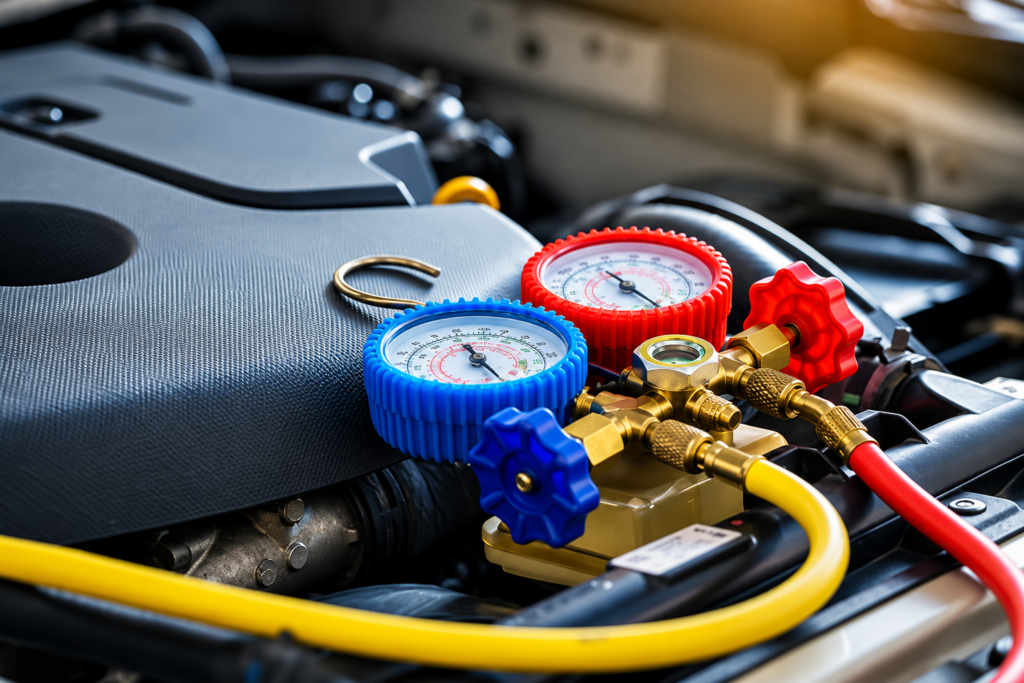
A technician can inspect the system by checking refrigerant pressure, compressor engagement, electrical signals, belt condition, condenser airflow, and visible signs of leakage. The system may also be tested for contamination and abnormal pressure readings.
If the compressor has suffered an internal failure, debris may have circulated through the refrigerant circuit. In such cases, replacing only the compressor may not address the entire problem. Other components may require cleaning, inspection, or replacement according to the extent of contamination.
The correct repair procedure also depends on the compressor design and vehicle manufacturer’s specifications.
Auto AC Compressor Replacement Considerations
An auto AC compressor replacement normally involves recovering the refrigerant, removing the drive belt or electrical connections as applicable, disconnecting refrigerant lines, removing mounting hardware, and installing the replacement unit.
The system then needs to be evacuated and recharged using the specified refrigerant quantity. The correct type and amount of compressor oil must also be considered.
The replacement should not simply be filled with an arbitrary amount of oil. Excess oil can affect cooling performance, while insufficient lubrication can contribute to compressor damage.
After installation, the system should be checked for leaks and tested under appropriate operating conditions.
How to Extend Compressor Service Life
Good maintenance can reduce unnecessary stress on the AC system. Running the air conditioner periodically, even during cooler months, can help circulate refrigerant oil through the system.
Keeping the condenser free from excessive dirt and debris can also support proper heat transfer. The drive belt and related components should be inspected where applicable.
If cooling performance gradually declines, investigating the problem early is preferable to repeatedly adding refrigerant without finding the source of the loss.
For a car air conditioner compressor, correct refrigerant handling and proper system diagnosis are especially important because compressor performance depends on the condition of the entire AC circuit.
Final Considerations Before Buying a Replacement
A compressor should be selected according to the vehicle’s exact requirements rather than appearance alone. Mounting points, pulley configuration, connector type, refrigerant compatibility, displacement, and manufacturer specifications can all affect fitment and operation.
Before ordering a replacement, compare the original part number with the replacement listing and verify compatibility using the vehicle identification number when available.
A careful diagnosis can also reveal whether the compressor is actually responsible for the AC problem. A failed fuse, leaking hose, restricted condenser, faulty pressure sensor, or electrical issue can produce symptoms that resemble compressor failure.
Understanding these differences makes AC troubleshooting more accurate and helps prevent replacing an expensive component unnecessarily.