
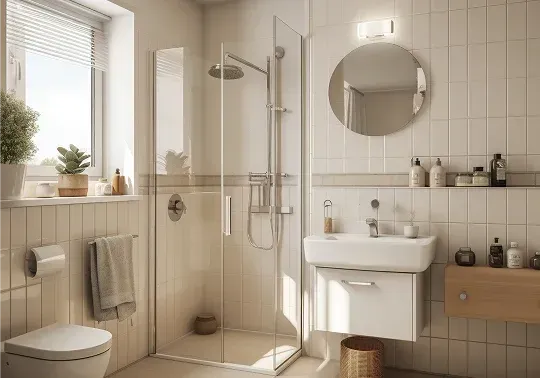
Bathroom design often depends on a handful of major features: the vanity, tile, lighting, fixtures, and shower enclosure. Among these elements, glass can have an especially strong visual effect because it defines the shower area without creating a heavy barrier. A clear glass frameless shower door keeps the room visually open while giving the enclosure a clean architectural appearance that works particularly well with contemporary interiors.
Keep the Bathroom Visually Open
Traditional shower enclosures can contain several metal frames and tracks that divide the room into separate visual sections. Frameless glass reduces those interruptions.
Clear panels allow the eye to travel through the shower area and continue toward the tile, fixtures, and walls beyond it. This can make a compact bathroom appear less crowded.
The effect is particularly noticeable in smaller bathrooms. Instead of creating a solid visual boundary around the shower, transparent glass maintains the sense of continuity between the wet and dry areas.
The room does not become physically larger, but the uninterrupted sightline can make it feel more spacious.
Let the Tile Design Remain Visible
Bathroom tile is often a major part of the design investment. Patterned walls, textured surfaces, large-format porcelain, natural stone, and decorative mosaics can lose some of their impact when hidden behind a bulky shower enclosure. Clear frameless glass keeps those surfaces visible.
A beautifully tiled shower wall can remain part of the overall bathroom composition rather than becoming a feature seen only from inside the enclosure. This is particularly useful when the shower contains a statement wall or carefully arranged niche.
The transparency also allows subtle tile textures to interact with natural and artificial light.
Create a Cleaner Architectural Profile
Frameless shower glass has a restrained appearance because the glass itself becomes the dominant visual element. Minimal hardware and carefully positioned fittings keep the enclosure from looking overly mechanical.
Chrome hardware can complement polished fixtures, while matte black fittings can provide stronger contrast against light tile. Brushed finishes can create a softer connection with other metallic elements in the bathroom.
Hardware should be selected as part of the overall design rather than treated as a separate decision. Handles, hinges, brackets, and other fittings can influence the character of the finished enclosure.
Make Small Bathrooms Feel More Spacious
Limited floor space can make bathroom planning challenging. A conventional shower enclosure may visually divide an already compact room.
Frameless glass helps reduce that visual separation. Light can pass through the enclosure, and the floor and wall surfaces remain visible from different parts of the bathroom.
A clear glass enclosure can work particularly well alongside light-colored tile, large mirrors, and strategically placed lighting. Together, these elements can create a brighter and more open visual environment.
Door configuration also matters. A hinged door, sliding arrangement, or other suitable design should provide adequate access without interfering with nearby fixtures.
Bring More Attention to Natural Light
Natural light can make a bathroom feel considerably more inviting. Windows positioned near or inside the shower area can provide daylight, but an opaque enclosure can limit how much of that light reaches the rest of the room.
Clear glass allows daylight to pass visually through the shower enclosure. A window can remain visible from the vanity or other areas instead of being blocked by a solid partition.
Privacy requirements still need consideration. Where necessary, textured, patterned, or partially obscured glass can provide additional discretion while retaining some of the visual openness associated with glass.
Design Around the Shower’s Shape
Bathrooms rarely have identical layouts. Some showers occupy rectangular alcoves, while others sit in corners or use unusual wall configurations.
Custom frameless glass can accommodate a variety of layouts when properly measured and fabricated. Panels can be designed around corners, benches, niches, and other architectural features.
A custom enclosure can also make better use of awkward spaces. Instead of forcing a standard-sized unit into the room, the glass can be planned around the actual dimensions.
Accurate measurements are essential because small errors can affect door movement, panel alignment, hardware placement, and overall fit.
Choose Glass With Safety in Mind
The appearance of frameless glass should never be considered separately from its safety requirements. Shower enclosures need glass that is appropriate for the application, along with suitable hardware and installation methods.
Tempered safety glass is commonly used in shower applications because of its safety characteristics. The appropriate thickness and configuration depend on the enclosure design and applicable requirements.
Professional installation is also important. Panels and hardware need to be properly aligned and securely mounted to provide reliable everyday operation.
A shower door is handled frequently, so hinges, handles, seals, and other components should be selected for the demands of the installation.
Keep Maintenance Straightforward
Clear glass naturally shows water spots, soap residue, and fingerprints more readily than heavily textured surfaces. Fortunately, routine care can keep a frameless shower looking clean.
Wiping down the glass after use can reduce water buildup. Regular cleaning with a suitable glass cleaner can address soap residue and mineral deposits.
The hardware should also be cleaned appropriately. Harsh or abrasive products can damage certain finishes, so maintenance products should match the materials being cleaned.
Good ventilation helps as well. Reducing persistent humidity can support a cleaner bathroom environment and limit moisture accumulation around the enclosure.
Custom Glass Can Refine the Finished Look
The best shower enclosure is one that works with the proportions and details of the entire bathroom.
At Luxurious Glass LLC, custom glass fabrication can accommodate different panel dimensions, door configurations, hardware finishes, and bathroom layouts. This approach can be useful when a standard enclosure does not fit the space or when the homeowner wants the glass to coordinate closely with the existing design.
The enclosure can be planned around the vanity, toilet, bathtub, wall niches, tile patterns, and available walking space. Such details can help the shower feel like part of the architecture rather than a separate fixture placed inside the room.
Match the Door Style to the Layout
The shower door can influence both appearance and usability. Hinged doors can provide a simple, open feel where sufficient clearance exists. Sliding doors may be appropriate for bathrooms where swing space is limited.
Door handles can also contribute to the visual style. A long vertical handle creates a strong linear detail, while smaller handles can produce a more understated appearance.
The opening direction and clearance should be checked carefully against nearby fixtures before installation.
A Clear Choice for Contemporary Bathrooms
Frameless shower glass can give a bathroom a lighter visual profile while allowing tile, lighting, fixtures, and architectural details to remain visible. Its clean appearance suits contemporary interiors, yet the simplicity of clear glass can also complement transitional and traditional designs.
Successful installations depend on more than the glass itself. Proper measurements, suitable safety glass, appropriate hardware, thoughtful door placement, and professional installation all contribute to the finished result.
For homeowners planning a bathroom renovation or a new shower enclosure, contact us today to discuss frameless shower glass options with Luxurious Glass LLC and find a design suited to your space.