
Mixing metals used to be a design crime.
Interior designers have been telling us for decades — there’s one rule you should always follow. Choose a metal and repeat it throughout your house. Brass with brass, chrome with chrome. Otherwise? Chaos.
…but something has changed in the interiors world. The rules have been thrown out the window. Mixing metals is:
- Everywhere
- Expected
- A sign of great design taste
And perhaps no where is this trend more apparent than when it comes to lighting. Contemporary ceiling fixtures are now some of the most versatile elements designers have to work with when wanting to add that second (or third!) metal finish into a room. One fixture can completely change the vibe of a space.
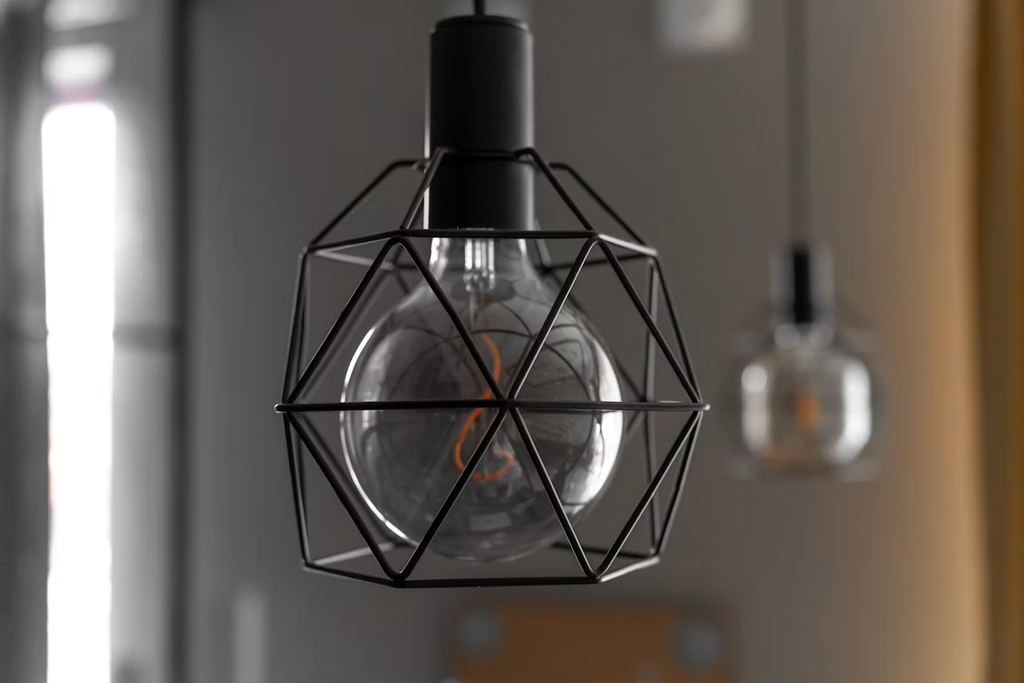
Shopping for modern lighting that complements mixed metal schemes means looking for modern ceiling lights that match at least one other finish present in the room. Vintage brass pendants hanging over a kitchen heavy on chrome. Matte black cage lights dangling above a brushed nickel dining table. Really where the trend shines.
Ready to dive in?
What’s inside this guide:
- Why Mixing Metals Went Mainstream
- The Rules That Actually Matter
- Popular Metal Combinations Right Now
- Where Mixed Metals Work Best
- Common Mistakes To Avoid
Why Mixing Metals Went Mainstream
Mixed metals have been taking over interiors in recent years.
Why? Because clients don’t want their homes to look generic — like they jumped out of a brochure. Using one metal finish throughout a room can make a space look dull, sterile and let’s face it…kind of boring.
Designers are beginning to understand this and are embracing the layered effect. “Mixing finishes on fixtures and hardware adds depth and personality to a room,” says Maggie Goodrich. They can’t get enough of it these days.
There are a few big reasons this trend has stuck around:
- Personality: Mixed finishes feel curated and collected over time.
- Timelessness: Rooms won’t look dated when trends shift.
- Flexibility: New pieces don’t have to match perfectly.
The outcome? A space that feels curated, cozy and authentic. Instead of sterile showroom ready and easily forgotten.
The Rules That Actually Matter
Just because the old rules are gone… doesn’t mean anything goes.
Now don’t get me wrong; there is still a right way and a wrong way to mix metals. The smartest designers have a guideline they follow to keep all the finishes looking connected instead of cluttered. Rule number one that many swear by is called the 70/30 rule — pick one metal to be dominant (about 70% of the finishes) then use one or two others as accents.
Here is how to think about it:
- Dominant metal (70%): This is your featured finish that grounds the room. Think of faucets, hardware and main light fixtures.
- Accent metal (20%): A contrasting second finish. Typically small touches such as frames or bathroom accents.
- Optional accent (10%): Third metal used sparingly for accent/style pops of interest.
Use only 3 metals in a room. Any more than 3 and it begins to look cluttered.
The trick is intentionality.
Everything should appear as though it was meant to be there — not just thrown down.
Popular Metal Combinations Right Now
Some metal combos just work better than others.
The color pairings that keep coming back are the ones that strike the perfect balance between warm and cool. Here are the combinations that are trending most these days:
- Brass + Matte Black: Warm meets moody. Great for kitchens and bathrooms.
- Chrome + Antique Brass: Sleek and modern with a vintage twist.
- Polished Nickel + Copper: Cool tones warmed up with a touch of copper.
- Gold + Gunmetal: Luxurious and bold without feeling over the top.
- Brushed Nickel + Bronze: A softer combo perfect for calming spaces.
First things first. For any of this to make sense, understanding the concept of warm vs cool tones is key. Warm metals (brass, copper, gold) are inviting. Cool metals (chrome, nickel, silver) are sleek and refreshing.
Mixing one warm with one cool gives a space balance.
Where Mixed Metals Work Best
Some rooms are practically made for this trend.
Kitchens and bathrooms are the top rooms to mix metals in because they already have so many finishes – taps, hardware, appliances, lights etc. Layering all these elements together instantly creates texture and interest.
However, it’s not just those two spaces that are trending. Entryways, living rooms, and bedrooms are seeing the appeal of layering as well.
Look at things like:
- Light fixtures
- Door handles
- Picture frames
- Cabinet pulls
- Side tables
- Curtain rods
Each of these can be a chance to add another coat of paint. Quick fixes like replacing hardware or hanging a metallic bracket can change the vibe of a space in one afternoon.
Common Mistakes To Avoid
Mixing everything doesn’t always work. Even seasoned homeowners can make these beginner mistakes when trying this trend.
Watch out for these mistakes:
- Too many metals in one space — Stick to two or three max.
- No dominant finish — Without an anchor metal, the room feels chaotic.
- Random placement — Metals shouldn’t all be grouped in one area of the room.
- Neglecting the subtext — Cool brass and warm brass aren’t remotely the same thing.
- Forgetting the fixed elements — Faucets, radiators and window frames all count.
The easiest way to check if a room is actually working?
Take a step back and squint. If the eye is attracted to one area and hangs there… something isn’t working. If it travels around the room uniformly… the mix is functioning properly.
Final Thoughts
Mixing metals has evolved from design rebellion to design cliché. Gone are the days of matching every finish in a room.
It’s endured for so long because it really works. Layering metals adds depth and personality to a room. It creates a lived-in look that you just can’t get with a single metal. And remember – with the 70/30 rule anyone can do it.
Here is a quick recap:
- Pick one dominant metal to anchor the room
- Add one or two accent metals for contrast
- Balance warm and cool tones together
- Distribute finishes evenly across the space
- Let statement fixtures like ceiling lights carry the look
Blend patterns deliberately… and watch what happens. Patterns are one trend that is here to stay, so why not start mixing?