

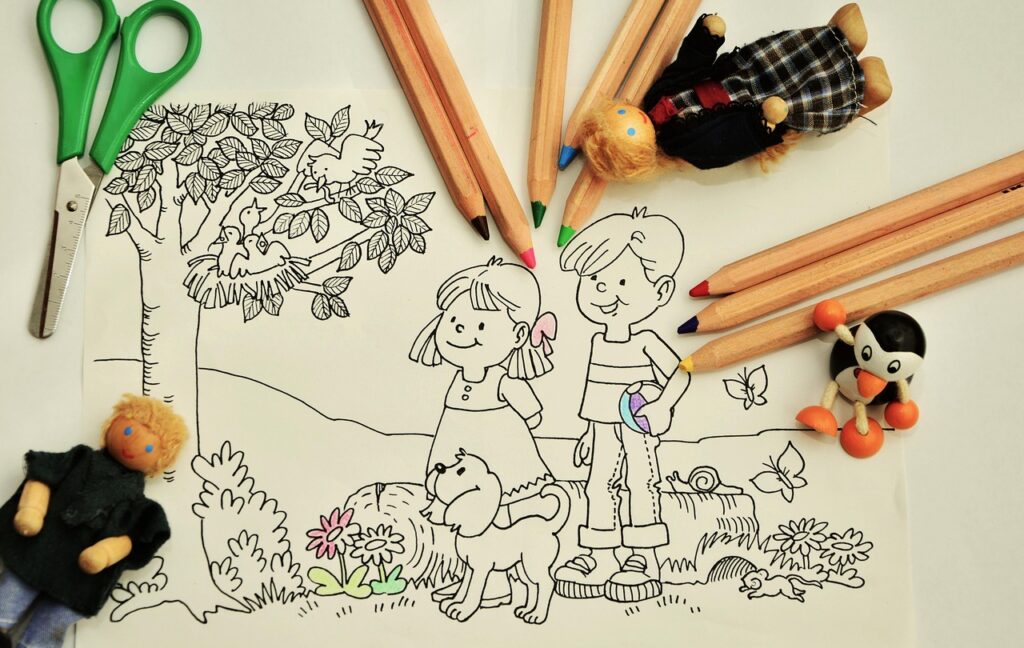
The Assumption That Coloring Is Just Busywork
Most parents and teachers assume coloring pages are filler material, something handed out when a lesson plan runs short or when a child needs five quiet minutes before the next activity begins. That assumption isn’t entirely unfair given how coloring sheets get used in practice, often as a reward or a distraction rather than a deliberate teaching tool. The assumption falls apart once you look at what’s actually happening inside a child’s hand and brain while they’re shading in a picture of a dinosaur or a map of the solar system.
Fine motor control, color recognition, spatial reasoning, and sustained attention are all being exercised simultaneously during what looks like a passive activity. Occupational therapists have used coloring and tracing exercises for decades specifically because gripping a crayon and controlling pressure builds the same muscle groups needed for handwriting. A child who colors regularly is quietly rehearsing skills that show up later in writing legibility and pencil control. None of that requires a worksheet labeled ‘educational’ to happen; it happens because of the mechanics of the task itself.
Matching the Activity to the Learning Goal
Where coloring actually earns its place in a classroom or homeschool routine is when the content on the page is tied to something being taught. A blank outline of a flower colored in freely is fine for relaxation, but a labeled diagram of a flower’s parts, colored according to instructions, turns the same activity into a review exercise. The difference is intentional design, not the act of coloring itself. Teachers who pair coloring sheets with vocabulary lists, historical timelines, or basic math facts are using the format as a memory aid rather than a time-filler.
This is where resources built specifically around subject matter start to outperform generic printables. Sites offering educational coloring activities organize their sheets by topic, from life cycles to geography to number sense, so a parent or teacher can pull something that reinforces what’s already been taught that week instead of searching for a coincidentally relevant picture. Repetition tied to visual engagement tends to stick better than repetition through flashcards alone, and that gap in retention shows up over weeks rather than in a single lesson. A child coloring a labeled map of continents while naming them aloud is doing light cartography practice without realizing it’s practice at all.
The age of the child changes what the activity should emphasize. Preschoolers benefit most from simple shapes and color-matching tasks that build hand control, while early elementary students can handle sheets that ask them to color based on a math answer or a vocabulary clue, adding a layer of problem-solving to the motor skill practice. Older children, including those who still enjoy coloring into middle school, often respond well to detailed scenes tied to science or history topics, where the complexity itself holds their attention longer than a simplified version would. None of this requires expensive materials, just a page with a purpose behind it.
Visit this website: Common Mistakes to Avoid When Searching for Parenting Advice Online
Treating coloring as a stand-in for reading, writing, or hands-on experimentation is where the practical trouble starts. A worksheet with a colored picture of a volcano doesn’t teach a child why volcanoes erupt; it only reinforces vocabulary or sequencing if the content is structured to do that. Teachers sometimes lean on coloring pages because they’re easy to prepare and keep a room quiet, which is a reasonable logistical choice but not the same as a learning outcome. The honest way to use coloring in a lesson plan is as a supplement that reinforces something taught through other means, not the primary vehicle for new information, and expecting more from a crayon and a printed outline tends to end in disappointment.